
Introduction
Chemicals are widely used across industries, agriculture, healthcare, and households, making their management a critical component of environmental protection and public health. However, effective chemical management is not possible without accurate and reliable data. Without knowing what chemicals are being produced, imported, used, and disposed of, it becomes extremely difficult to assess risks or implement control measures.
At Gray2GreenEnvironment, we aim to promote informed decision-making and sustainable practices in chemical and hazardous waste management by highlighting the importance of data, transparency, and governance. One of the most fundamental elements of this system is the development of a comprehensive chemical inventory and data management system, which serves as the backbone of effective chemical governance.
1. What is a Chemical Inventory?
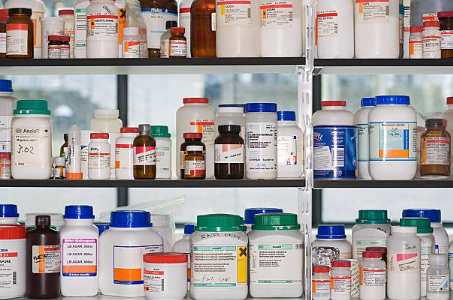
A chemical inventory is a structured database that contains detailed information about chemicals within a country, industry, or organization. This includes data on the types of chemicals, their quantities, sources, uses, hazards, and disposal methods. Such inventories may exist at national, regional, or facility levels and are essential for tracking chemical flows throughout their lifecycle.
A well-developed chemical inventory provides a clear picture of chemical usage patterns and helps authorities and industries understand potential risks associated with different substances.
2. Why Chemical Data Management is Important
Accurate and well-managed chemical data plays a crucial role in ensuring safe handling and regulation of chemicals. It supports risk assessment, enables informed policymaking, and improves emergency preparedness in case of chemical accidents. Without reliable data, governments cannot develop effective regulations, and industries cannot ensure compliance with safety standards.
Furthermore, chemical data management enhances transparency and accountability, making it easier to monitor hazardous substances and prevent illegal or unsafe practices.
3. Key Components of a Chemical Inventory System
An effective chemical inventory system typically includes several key components:
- Identification of Chemicals: Names, CAS numbers, and classifications
- Quantity and Usage Data: Information on production, import, export, and use
- Hazard Information: Toxicity, flammability, and environmental risks
- Storage and Handling Details: Safety measures and conditions
- Waste Generation and Disposal: Methods of treatment and disposal
These components help create a comprehensive understanding of chemical flows and risks.
4. Role in Chemical Risk Assessment and Management
Chemical inventories are essential for conducting accurate risk assessments. They provide the data needed to identify hazardous substances, evaluate exposure levels, and prioritize risk management actions. Without proper data, risk assessments may be incomplete or inaccurate, leading to ineffective decision-making.
In addition, inventories support risk management by helping authorities track high-risk chemicals and implement appropriate control measures, such as restrictions, bans, or safe handling guidelines.
5. Global Practices and Chemical Inventory Systems
Many countries have established comprehensive chemical inventory and data management systems to regulate the production, import, and use of chemicals. These inventories serve as the backbone of chemical governance by distinguishing between existing and new substances and ensuring regulatory compliance.
One of the most prominent examples is the United States, which maintains the Toxic Substances Control Act (TSCA) Chemical Substance Inventory. This inventory includes all chemical substances manufactured, processed, or imported in the country and plays a central role in chemical regulation. It currently contains over 86,000 chemical substances, making it one of the most extensive chemical databases globally . Chemicals not listed in this inventory are considered “new” and must undergo regulatory review before entering the market.
In the European Union, chemical management is governed under the REACH Regulation (Registration, Evaluation, Authorisation and Restriction of Chemicals). The EU maintains several inventories, including EINECS (European Inventory of Existing Commercial Chemical Substances), ELINCS (European List of Notified Chemical Substances), and the REACH Registered Substances Database, which collectively support comprehensive chemical tracking and risk management.
Canada operates the Domestic Substances List (DSL) and the Non-Domestic Substances List (NDSL) under the Canadian Environmental Protection Act (CEPA). The DSL contains substances that are commercially used in Canada, with over 28,000 listed chemicals, while substances not included are treated as new and subject to notification and assessment requirements .
In Asia, several countries have also developed robust chemical inventory systems. China maintains the Inventory of Existing Chemical Substances in China (IECSC), which supports its regulatory framework similar to REACH. Japan uses the Existing and New Chemical Substances Inventory (ENCS) under its Chemical Substances Control Law (CSCL), while South Korea operates the Korea Existing Chemicals List (KECL) under K-REACH regulations.
Other countries have also developed national inventories, such as:
- Australia: Australian Inventory of Industrial Chemicals (AIIC, formerly AICS)
- Philippines: Philippine Inventory of Chemicals and Chemical Substances (PICCS)
- Taiwan: Taiwan Chemical Substance Inventory (TCSI)
These global systems demonstrate that maintaining a centralized and regularly updated chemical inventory is essential for effective chemical governance. They not only support risk assessment and regulatory enforcement but also facilitate international compliance and information exchange under global frameworks.
6. Challenges in Pakistan
In Pakistan, the development of a comprehensive chemical inventory and data management system remains a critical yet underdeveloped area of chemical governance. While the Ministry of Climate Change and Environmental Coordination has taken an important initial step by compiling a partial national chemical inventory, this effort represents only the beginning of a much larger process. To be truly effective, this inventory must be transformed into a fully integrated, centralized digital national system that enables real-time data access, inter-agency coordination, and informed decision-making.
However, several structural and institutional challenges hinder this transition. One of the most significant barriers is the lack of prioritization and willingness among officials to focus on data management. In many cases, data systems are perceived as unnecessary or secondary, with greater emphasis placed on visible, short-term actions rather than foundational systems like data collection and management. This mindset limits long-term progress, as global experience clearly demonstrates that effective chemical governance begins with strong data systems. Countries with advanced chemical management frameworks consistently prioritize inventory development as the first step—only after establishing reliable data do they move toward regulation, risk assessment, and enforcement.
In addition, Pakistan faces institutional fragmentation, where multiple agencies handle chemicals and waste without a unified data-sharing mechanism. The absence of standardized data formats and reporting protocols further complicates efforts to compile and harmonize information. Technical capacity constraints, including limited expertise in digital data systems and chemical information management, also pose a major challenge. Furthermore, industries often lack incentives—or face weak enforcement—to report accurate data on chemical use and hazardous waste generation.
Another critical issue is the lack of digital infrastructure to support a centralized inventory system. Existing data, where available, is often scattered, outdated, or maintained in non-digital formats, making it difficult to access and utilize effectively. This not only weakens regulatory oversight but also limits the country’s ability to meet international reporting obligations under global chemical frameworks.
Addressing these challenges requires a fundamental shift in approach—recognizing that data is not a secondary activity but the foundation of all effective chemical management decisions. Without a strong, centralized chemical inventory, efforts toward risk assessment, regulation, and environmental protection will remain fragmented and less effective.
7. Conclusion
Chemical inventory and data management are not merely technical tools—they are the foundation of effective chemical governance and informed decision-making. Without reliable and accessible data, it is impossible to accurately assess risks, enforce regulations, or design effective policies for protecting human health and the environment. As demonstrated by global best practices, countries that have successfully strengthened their chemical management systems have done so by first investing in robust, centralized chemical inventories.
In Pakistan, the initial efforts made by the Ministry of Climate Change and Environmental Coordination to compile a partial chemical inventory mark an important starting point. However, the real transformation lies in advancing this effort into a fully functional, digital, and integrated national system that supports coordination, transparency, and evidence-based decision-making. Overcoming existing challenges—particularly the lack of prioritization for data management, institutional fragmentation, and limited technical capacity—will be essential to move forward.
At Gray2GreenEnvironment, we emphasize that sustainable chemical and hazardous waste management begins with strong data systems. By recognizing the true value of data and investing in its development, Pakistan can significantly enhance its environmental governance, strengthen regulatory frameworks, and move towards a safer, more sustainable future.
0 Comments