
Introduction
The growing crisis of plastic pollution, hazardous waste, and chemically contaminated products has made it clear that waste management cannot remain solely a municipal responsibility. Around the world, governments are adopting policy tools that shift accountability upstream to those who place products on the market. Extended Producer Responsibility (EPR) is one such transformative mechanism that links product design, waste generation, and environmental accountability under a single regulatory framework. Gray2GreenEnvironment platform is working to promote awareness and informed dialogue on policy instruments like EPR that strengthen sustainable waste governance and responsible chemical management. By integrating environmental responsibility into production systems, EPR supports circular economy objectives and reduces long-term ecological and health risks.
1- What is Extended Producer Responsibility (EPR)?
Extended Producer Responsibility is formally defined by the Organisation for Economic Co-operation and Development (OECD) as:
“An environmental policy approach in which a producer’s responsibility for a product is extended to the post-consumer stage of a product’s life cycle.”
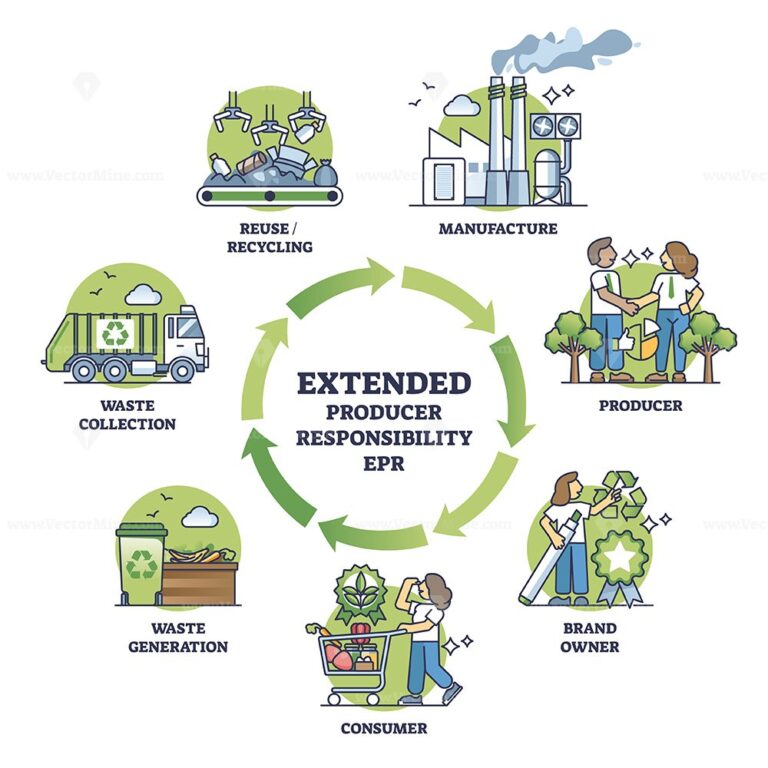
This definition emphasizes that producers are not only responsible for manufacturing and selling products, but also for managing the environmental impacts of those products after consumer use. EPR typically includes financial responsibility (funding collection and recycling systems) and physical responsibility (organizing or ensuring recovery and safe disposal). By internalizing waste management costs into product pricing and design decisions, EPR encourages producers to adopt safer materials, reduce toxic chemical content, improve recyclability, and design products with longer life spans.
2- Why Extended Producer Responsibility is Necessary
Global waste generation continues to rise at an alarming rate. According to the World Bank, the world generates over 2 billion tonnes of municipal solid waste annually, and this figure is projected to increase significantly by 2050. A substantial portion of this waste includes plastics, electronic waste, packaging materials, and chemically treated products that pose environmental and health hazards if mismanaged. Municipal authorities, particularly in developing countries, often lack financial and technical capacity to handle these growing waste streams effectively. EPR becomes necessary because it shifts the financial burden from taxpayers to producers, incentivizes eco-design, reduces hazardous components in products, and strengthens formal recycling systems. Without upstream accountability, waste systems remain reactive and unsustainable.
3- EPR and Chemical Risk Reduction
Many products placed on the market contain hazardous additives, heavy metals, flame retardants, plasticizers, and other toxic substances that complicate recycling and contaminate secondary materials. Electronic waste, batteries, packaging plastics, and paints are common examples where chemical composition creates environmental risk during disposal or informal recycling. EPR encourages producers to reconsider material choices, substitute hazardous substances, and design products that are easier to dismantle and recycle safely. By linking product design to end-of-life responsibility, EPR supports safer chemical management across the entire lifecycle. Gray2GreenEnvironment platform highlights that EPR is not merely a waste tool but also a chemical risk reduction strategy that aligns with lifecycle-based environmental governance.
4- Global Best Practices in EPR Implementation
Several countries have implemented strong EPR frameworks with measurable outcomes. Germany’s Packaging Act requires producers to register and finance collection and recycling of packaging waste, resulting in high recycling rates across material streams. The European Union’s Waste Electrical and Electronic Equipment (WEEE) Directive mandates producers to finance collection and treatment of e-waste, reducing hazardous leakage from discarded electronics. In Japan, the Home Appliance Recycling Law places responsibility on manufacturers to recover and recycle major appliances. Canada has province-led EPR programs covering electronics, packaging, tires, and hazardous household waste. These examples demonstrate that well-designed EPR systems improve recycling performance, reduce landfill dependency, and promote circular economy transitions while ensuring accountability within industry sectors.
5- Status of Extended Producer Responsibility in Pakistan
In Pakistan, EPR has been formally introduced through federal and provincial regulations to ensure that producers, importers, and manufacturers take primary responsibility for the collection, recycling, and management of single-use plastic waste. At the federal level, the Pakistan Environmental Protection Agency notified the Single-use Plastics (Prohibition) Regulations, 2023, which explicitly require producers, importers, and beverage manufacturers to develop and submit an EPR-based collection plan within a specified timeframe and assume primary responsibility for collection within six months of enforcement. At the provincial level, the Environmental Protection Department Punjab introduced the Punjab Environmental Protection (Production and Consumption of Single Use Plastic Product) Regulations, 2023, mandating producers to establish plastic waste collection systems and assigning responsibilities to producers, consumers, collectors, and recyclers to ensure recycling and circularity in line with international best practices. These developments mark an important policy shift toward structured producer accountability in Pakistan.
5- Roles and Responsibilities of Key Stakeholders
Effective EPR implementation requires coordinated action among multiple stakeholders. Producers and importers bear primary financial and operational responsibility for establishing collection systems, meeting recovery targets, ensuring environmentally sound recycling, and reporting compliance to regulators. Government authorities are responsible for establishing clear regulatory frameworks, monitoring compliance, approving EPR plans, setting recovery targets, and enforcing penalties where necessary. Consumers play a role by properly segregating waste and participating in collection systems established under EPR programs. Waste collectors and recyclers must ensure safe handling, environmentally sound processing, and compliance with technical standards to prevent secondary pollution. Civil society organizations and platforms like Gray2GreenEnvironment contribute by raising awareness, promoting transparency, supporting policy dialogue, and encouraging industry accountability. When each stakeholder fulfils defined responsibilities, EPR systems function effectively and contribute to environmental protection.
6- Challenges in Implementing EPR and Recommendations
Despite its potential, EPR implementation faces practical challenges, particularly in developing economies. Informal recycling sectors often dominate waste collection, making traceability and compliance monitoring difficult. Weak enforcement capacity, limited data on waste flows, and lack of producer registration systems can hinder effective implementation. Additionally, some producers may resist compliance due to increased financial obligations. Addressing these challenges requires transparent reporting systems, digital tracking mechanisms, stakeholder coordination, and phased regulatory enforcement. Strong institutional capacity and public awareness are essential to ensure that EPR does not remain a policy on paper but translates into measurable environmental outcomes.
7- Conclusion
Extended Producer Responsibility represents a fundamental shift in environmental governance by linking production decisions with post-consumer environmental impacts. By internalizing waste management costs, encouraging safer product design, and strengthening recycling systems, EPR supports circular economy objectives and reduces chemical risks. With recent regulatory developments in Pakistan and strong international examples, EPR is emerging as a central tool for sustainable waste management. Gray2GreenEnvironment platform continues to advocate for informed policy implementation, responsible production systems, and stakeholder collaboration to ensure that EPR becomes an effective driver of environmental protection rather than merely a regulatory requirement.
0 Comments