
Introduction
Chemicals are present in nearly every aspect of modern life, from household cleaning products and cosmetics to industrial materials and agricultural inputs. While many of these substances are beneficial when used properly, improper handling or lack of awareness can lead to significant health and environmental risks. One of the most effective tools for communicating chemical hazards is the use of standardized safety labels and symbols that help users quickly recognize potential dangers.
Gray2GreenEnvironment is a platform that promotes awareness and informed discussion on environmental governance, chemical management, and hazardous waste issues. Through analytical blogs and knowledge sharing, the platform aims to help readers understand important safety systems and global regulatory frameworks that guide responsible chemical use. Among these systems, the Globally Harmonized System of Classification and Labelling of Chemicals plays a crucial role in ensuring that chemical hazards are clearly communicated across industries, countries, and supply chains.
1- What is the Globally Harmonized System (GHS)?
The Globally Harmonized System of Classification and Labelling of Chemicals is an internationally agreed framework developed under the United Nations to standardize how chemical hazards are classified and communicated. Before the development of this system, different countries used their own labelling rules and hazard communication systems, which created confusion for workers, consumers, transporters, and regulators involved in the handling of chemicals.
GHS provides a unified approach for identifying chemical hazards and communicating them through standardized pictograms, signal words, hazard statements, and precautionary instructions. The purpose of this system is to ensure that individuals who manufacture, transport, use, or dispose of chemicals can easily recognize potential risks and follow appropriate safety measures. By harmonizing hazard communication globally, the system contributes to improved workplace safety, environmental protection, and smoother international trade in chemicals.
2- Why Chemical Hazard Labels Are Important
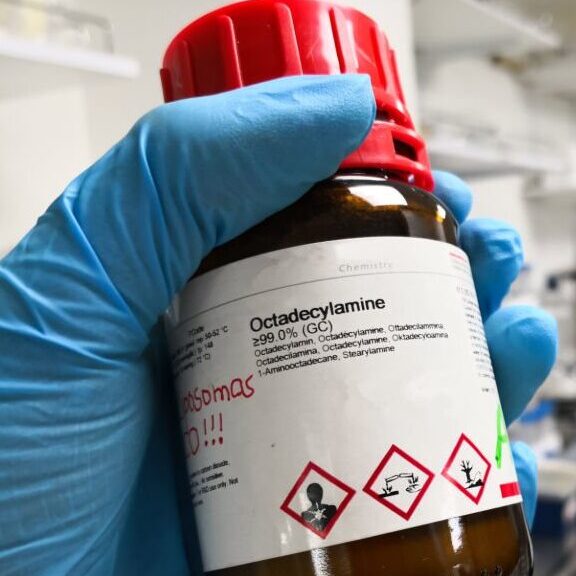
Chemical labels are often the first and most visible source of safety information about a substance. A properly labeled chemical container provides essential information about the hazards associated with the product, as well as instructions for safe handling, storage, and disposal. These labels allow users to identify risks quickly, even without extensive technical knowledge about the chemical composition of a product.
The presence of clear hazard symbols and precautionary statements is particularly important because chemicals are used by a wide range of people, including industrial workers, transport personnel, farmers, and household consumers. Without proper labelling, individuals may unknowingly expose themselves or the environment to harmful substances. Effective chemical labelling therefore plays a critical role in accident prevention, occupational safety, and environmental protection.
3- Understanding the Common GHS Hazard Symbols
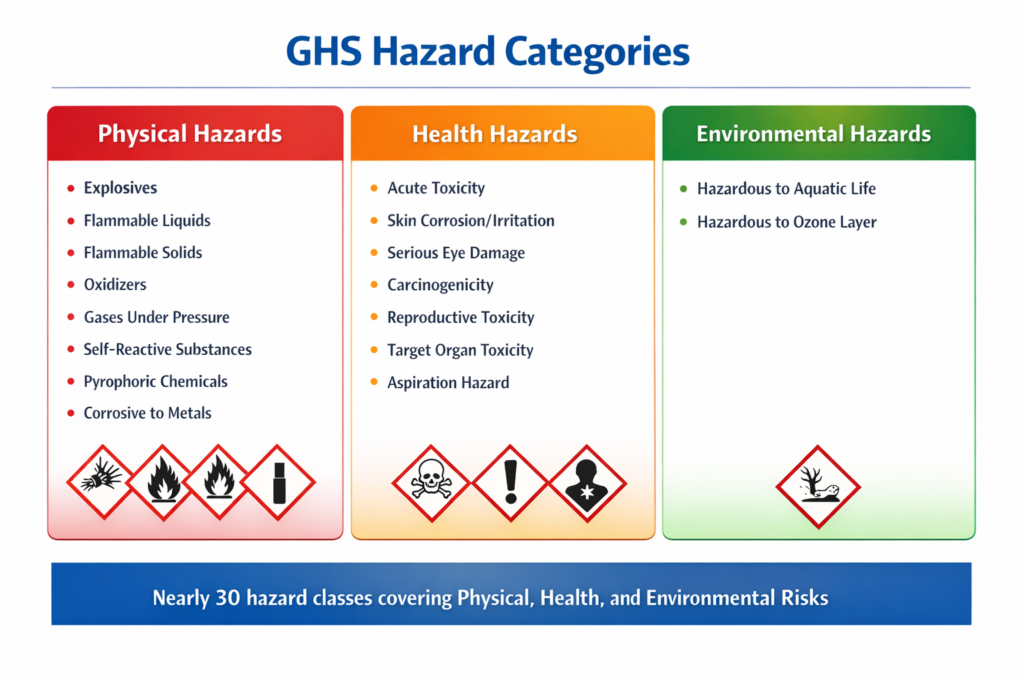
The Globally Harmonized System communicates chemical hazards through a set of standardized pictograms that appear within a red diamond-shaped border. These pictograms allow users to immediately recognize the type of risk associated with a chemical product. Under the GHS framework, hazards are generally categorized into three major groups: physical hazards, health hazards, and environmental hazards.
Physical hazards refer to the properties of chemicals that may cause fires, explosions, or dangerous reactions. This category includes pictograms such as the flame symbol for flammable substances, the flame over circle symbol for oxidizing chemicals, the exploding bomb symbol for explosive or highly reactive materials, and the gas cylinder symbol for gases stored under pressure. These symbols alert users to potential risks associated with combustion, rapid chemical reactions, or pressurized containers.
Health hazards indicate the possible effects of chemicals on human health through exposure. The system includes several pictograms for this category, including the skull and crossbones for acute toxicity, the health hazard symbol representing serious long-term health effects such as carcinogenicity or respiratory sensitization, and the exclamation mark symbol for less severe effects such as irritation or harmful exposure. The corrosion symbol is also used to warn about chemicals that can cause severe skin burns or eye damage. These pictograms help workers and consumers recognize potential health risks before handling chemical substances.
Environmental hazards focus on the potential impact of chemicals on ecosystems. The environmental hazard pictogram, represented by a dead tree and fish, indicates substances that may cause damage to aquatic life and ecosystems if released into the environment. This symbol encourages careful handling and responsible disposal practices in order to prevent contamination of water bodies and natural habitats.
4- Chemical Labels and Safety Data Sheets
Chemical labels are part of a broader hazard communication system that also includes Safety Data Sheets. Safety Data Sheets provide detailed technical information about a chemical substance, including its composition, physical properties, potential hazards, safe handling procedures, and emergency response measures. These documents are particularly important in workplaces where chemicals are frequently used or stored.
Safety Data Sheets guide workers and emergency responders on how to manage chemical spills, fires, or accidental exposure. They also provide instructions for proper storage conditions and environmentally sound disposal methods. Together with hazard labels, Safety Data Sheets ensure that accurate and comprehensive information about chemical risks is available throughout the entire supply chain.
5- Why Public Awareness of Chemical Labels Matters
Although chemical hazard labels are widely used in industrial settings, many people are not fully aware of their meaning when they encounter them in everyday products. Household items such as cleaning agents, pesticides, paints, and solvents may contain warning symbols that consumers often overlook or misunderstand.
Improving public awareness of these labels can significantly reduce accidental poisoning, chemical exposure, and environmental contamination. Simple actions such as reading product labels, following precautionary instructions, and storing chemicals safely can prevent many common household incidents. Educating consumers about hazard symbols also encourages responsible product use and better disposal practices.
6- GHS Implementation Status in the World
The Globally Harmonized System has been widely adopted across the world as countries recognize the importance of consistent chemical hazard communication. More than seventy countries have incorporated GHS principles into their national regulatory frameworks, including members of the European Union, the United States, Canada, Japan, China, and Australia. Many other countries are at different stages of implementation or regulatory alignment with the system.
The international community also emphasizes the adoption of GHS under broader chemical management initiatives such as the Global Framework on Chemicals. This framework, adopted by governments and stakeholders to strengthen sound management of chemicals and waste worldwide, encourages countries to implement harmonized systems for chemical classification, labeling, and risk communication. The promotion of GHS under this framework highlights the importance of clear hazard communication as a key component of lifecycle chemical management and global chemical safety governance.
The global adoption of GHS has significantly improved workplace safety and environmental protection by ensuring that chemical hazards are communicated in a consistent and recognizable format. It has also facilitated international trade by reducing regulatory differences in chemical labeling requirements. Through coordinated international efforts, the system continues to expand and strengthen chemical safety practices worldwide.
7- GHS Status in Pakistan
In Pakistan, the adoption of the Globally Harmonized System is currently progressing through policy and regulatory initiatives. The Ministry of Climate Change and Environmental Coordination has formulated a national GHS adoption plan under its Special Program aimed at strengthening chemical safety governance and improving hazard communication in the country.
Although nationwide implementation is still in the pipeline, several export-oriented industries and multinational companies operating in Pakistan already follow GHS labeling and safety standards to meet international regulatory requirements. As institutional capacity and regulatory mechanisms continue to develop, the implementation of GHS at the national level is expected to enhance chemical safety management, improve workplace protection, and align Pakistan’s regulatory system with global best practices.
8- The Role of Gray2GreenEnvironment
Gray2GreenEnvironment contributes to the broader effort of improving chemical safety awareness by translating complex regulatory frameworks into accessible knowledge. Through research-based blogs and professional discussions, the platform encourages responsible chemical use and highlights the importance of global environmental governance systems.
By promoting understanding of chemical hazard communication tools such as GHS labeling, lifecycle management approaches, and international environmental agreements, the platform aims to support informed decision-making among professionals, policymakers, and the public. Strengthening awareness at the community level is an important step toward preventing chemical accidents and protecting environmental health.
9- Conclusion
Chemical safety labels are an essential communication tool that helps protect people, workplaces, and ecosystems from potential chemical hazards. By clearly identifying risks and providing guidance for safe handling, these labels reduce accidents and promote responsible chemical management.
As chemical production and consumption continue to grow globally, the importance of standardized hazard communication systems such as the Globally Harmonized System becomes even more significant. Increasing awareness of these symbols among industries, regulators, and the general public will contribute to safer chemical use and stronger environmental protection.



0 Comments