
Introduction
Chemicals are essential to modern life. They support agriculture, medicine, manufacturing, energy production, household products, and technological advancement. Yet these benefits come with responsibilities, as improper management can lead to serious risks for human health, workers, and the environment. Life Cycle Management (LCM) of Chemicals is an integrated approach that ensures chemicals are safely managed at every stage — from design and production to use, recycling, and final disposal. Through the Gray2GreenEnvironment platform, we aim to simplify complex environmental concepts and promote responsible chemical and waste management practices grounded in sustainability principles. By encouraging life cycle thinking, LCM shifts the focus from reactive control to preventive action, ensuring that environmental protection is embedded in every stage of chemical management.
1- Why Life Cycle Management of Chemicals Is Necessary
Life cycle management is necessary because chemical risks do not begin at disposal — they start at design. Many hazardous substances show their adverse impacts only after years or decades of use, accumulation, or environmental release. For example, persistent organic pollutants (POPs) like polychlorinated biphenyls (PCBs) do not break down easily and accumulate in animal tissues, causing long-term ecological and health effects. Similarly, lead in paints and children’s toys can result in developmental disorders, and mercury in artisanal gold mining contaminates waterways and enters the food chain. The COVID-19 pandemic also revealed challenges with increased disinfectant and sanitizer use, illustrating that chemical risks can rise rapidly without a life cycle framework.
LCM is not just about avoiding harm — it is about creating resource efficiency, regulatory coherence, and sustainable development. Under the United Nations Sustainable Development Goals (SDGs), especially SDG 12 (Responsible Consumption and Production) and SDG 3 (Good Health and Well-Being), managing chemicals throughout their life cycle is critical to achieving environmental, public health, and economic targets.
2- The Life Cycle Stages of Chemicals
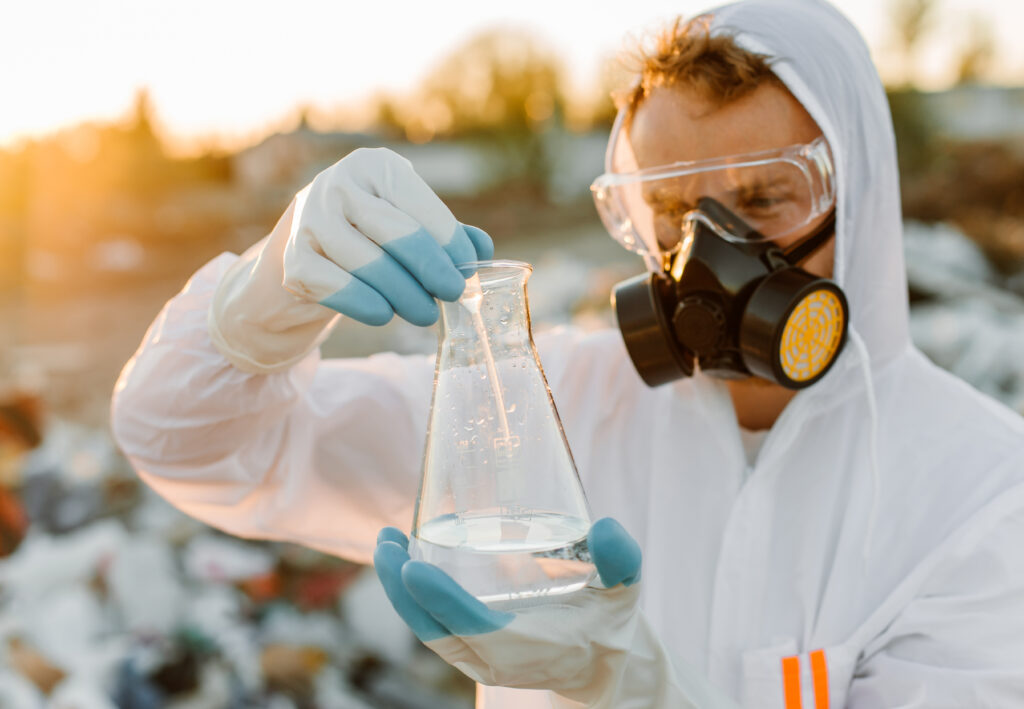
Life Cycle Management (LCM) considers chemicals from their initial design to their final disposal. Each stage presents unique risks and responsibilities, and weak management at any point can undermine the entire system. Below is a detailed explanation of each stage.
i- Design and Innovation
The design stage is the most critical point in the chemical life cycle because risks can be prevented before they are created. Life cycle thinking begins with selecting raw materials that are less toxic, less persistent, and less bioaccumulative. Applying green chemistry principles allows scientists and manufacturers to design products that perform effectively while minimizing environmental and health hazards. For example, replacing solvent-based paints with water-based alternatives significantly reduces volatile organic compound (VOC) emissions, improving indoor and outdoor air quality. In the European Union, regulations under REACH require companies to provide safety data before chemicals enter the market, encouraging substitution of hazardous substances with safer alternatives. By integrating hazard assessment at the innovation stage, industries can reduce long-term liabilities, regulatory costs, and environmental damage.
ii- Production
During production, chemicals are synthesized, processed, packaged, and prepared for distribution. This stage involves potential exposure risks for workers, accidental releases into air and water, and generation of hazardous by-products. Effective life cycle management requires industries to adopt cleaner production techniques, closed-loop systems, emission control technologies, and strict occupational safety measures. For instance, advanced chemical plants in Germany and Japan use automated monitoring systems to track emissions and prevent leaks before they escalate into environmental incidents. Waste minimization strategies, such as solvent recovery and process optimization, reduce both environmental impact and operational costs. Strong regulatory oversight, workplace safety standards, and environmental compliance audits are essential to ensure that manufacturing processes do not create unnecessary risks.
iii- Distribution and Transportation
Chemicals often travel long distances from manufacturing facilities to distributors, retailers, and end-users. Improper packaging, labeling, or transport conditions can lead to spills, accidents, and exposure during transit. Life cycle management at this stage includes compliance with international transport regulations, proper hazard labeling aligned with the Globally Harmonized System (GHS), and secure containment systems. For example, many countries follow strict transport codes for hazardous materials to reduce risks during road, rail, or maritime movement. Emergency response preparedness, trained personnel, and real-time tracking systems further strengthen safety during distribution. Managing risks in this stage ensures that chemical safety is not compromised between production and use.
iv- Use and Application
The use phase is often where chemicals directly interact with humans and the environment. Agricultural pesticides, household cleaning agents, industrial solvents, and medical chemicals all require correct handling to prevent misuse and overexposure. Life cycle management at this stage focuses on clear labeling, accessible Safety Data Sheets (SDS), user training, and public awareness campaigns. For example, integrated pest management programs promote controlled pesticide use, reducing environmental contamination while maintaining agricultural productivity. In many developed countries, consumer product regulations require hazard communication symbols to inform users about potential risks. Responsible use reduces accidental poisoning, environmental contamination, and unnecessary chemical release into soil and water systems.
v- Recycling and Reuse
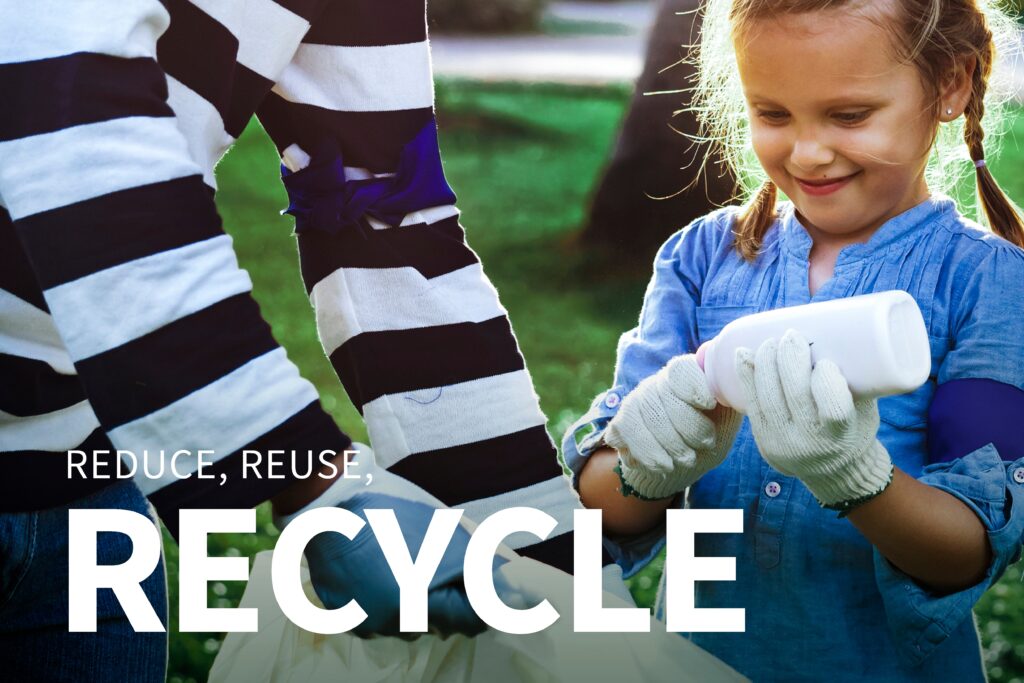
Where feasible, chemicals and chemical-containing products should be recovered or recycled to reduce resource extraction and environmental contamination. Recycling not only conserves raw materials but also prevents hazardous substances from entering informal or unsafe waste streams. A good example is the formal recycling of lead-acid batteries in the United States and European countries, where controlled recovery systems prevent lead exposure and environmental pollution. Solvent recovery in pharmaceutical and manufacturing industries also demonstrates how circular economy principles can be applied to chemical management. However, recycling systems must themselves be safe and regulated to prevent secondary contamination. Proper infrastructure, certified facilities, and monitoring mechanisms are crucial at this stage.
vi- Final Treatment and Destruction
When chemicals can no longer be reused or recycled, environmentally sound disposal becomes necessary. This stage includes specialized treatment technologies such as high-temperature incineration, chemical neutralization, stabilization, and secure landfilling. Improper disposal can lead to long-term soil and groundwater contamination, creating costly remediation challenges. Countries like Sweden operate advanced hazardous waste treatment facilities with strict emission standards to minimize environmental impact. Compliance with international agreements such as the Basel Convention ensures that hazardous waste is managed responsibly and not exported to countries lacking adequate treatment capacity. Proper disposal safeguards ecosystems and protects future generations from legacy pollution.
3- World Best Practices in Life Cycle Management
Some countries and regions have developed robust LCM models:
i- European Union – REACH and CLP
Under REACH, manufacturers must register chemicals with hazard data and encourage substitution of hazardous substances. The Classification, Labeling and Packaging (CLP) regulation ensures consistent hazard communication across the EU, aligning with the United Nations Globally Harmonized System (GHS).
ii- Japan – Chemical Substances Control Law
Japan’s regulatory framework requires risk assessment before market introduction and emphasizes reduction of environmental emissions. Public participation and transparency are integral, with extensive hazard information made available to citizens.
iii- Canada – Chemicals Management Plan (CMP)
Canada’s CMP identifies high-priority chemicals, conducts risk assessments, and implements risk management strategies, including restrictions, monitoring, and stakeholder engagement programs.
iv- Australia – National Industrial Chemicals Notification and Assessment Scheme (NICNAS)
Australia uses a life cycle approach by assessing chemical risks pre-market, promoting safe use, and requiring reporting of significant new uses.
4- Global Framework on Chemicals (GFC): An International Tool for Life Cycle Management
The Global Framework on Chemicals (GFC) serves as the most recent international policy instrument guiding countries toward the sound management of chemicals and waste throughout their entire life cycle. Adopted in 2023 as the successor to SAICM, the Global Framework on Chemicals promotes a comprehensive approach that integrates chemical safety into development planning, industrial production, trade, agriculture, health systems, and waste management. Unlike fragmented regulatory models, the GFC emphasizes prevention at the design stage, risk reduction during production and use, and environmentally sound management at the disposal stage. It also highlights the importance of transparency, data sharing, capacity building, and multi-stakeholder engagement, including governments, industry, academia, and civil society. By encouraging countries to adopt lifecycle-based policies, strengthen legal frameworks, and mobilize financial resources, the GFC aligns chemical management with sustainable development goals and global environmental protection priorities. In essence, it institutionalizes Life Cycle Management (LCM) at the international level, ensuring that chemicals are managed safely from production to final disposal.
5- Responsibilities of Key Stakeholders
Effective life cycle management depends on coordinated action:
i- Governments & Regulators
- Establish and enforce chemical laws
- Require hazard data and registration
- Promote safer substitutes and green chemistry
- Provide institutional capacity and laboratories
- Monitor compliance and take corrective action
ii- Industry & Manufacturers
- Apply life cycle thinking in product design
- Conduct hazard and exposure assessments
- Implement cleaner production and waste reduction
- Provide accurate labeling and Safety Data Sheets
- Support take-back and recycling initiatives
iii- Consumers & Communities
- Follow label instructions
- Participate in proper segregation and collection
- Choose less hazardous products
- Share awareness and advocate for safer options
iv- Academia & Research Institutions
- Develop improved hazard assessment methods
- Innovate green chemistry and safer alternatives
- Provide independent risk evaluations
- Train professionals in chemical safety
v- NGOs & Civil Society
- Raise public awareness
- Monitor regulatory implementation
- Advocate for vulnerable populations
- Foster community dialogues and capacity building
6- Conclusion
Life Cycle Management of Chemicals is not an optional add-on — it is essential for safeguarding health, ecosystems, and future sustainability. It reframes chemical risk from isolated stages to a continuous process of assessment, prevention, and improvement. By integrating life cycle thinking into legal frameworks, industrial practices, consumer behaviour, and community awareness, societies can transform chemicals from hidden hazards into manageable components of sustainable development. This holistic approach aligns with global goals, strengthens environmental systems, and ultimately supports safer, healthier communities for generations to come.
0 Comments