
Introduction
Chemicals are essential for modern development. They are used in agriculture, healthcare, manufacturing, electronics, and many other sectors that support economic growth and human well-being. However, when chemicals are poorly managed, they can cause serious impacts on human health and the environment, including pollution, occupational diseases, biodiversity loss, and contamination of air, soil, and water resources. Effective chemical management therefore requires coordinated policies, international cooperation, and strong national governance systems.
The Gray2GreenEnvironment platform works to raise awareness about chemical safety, hazardous waste management, and sustainable environmental practices through research-based blogs and professional insights. One of the most important international policy frameworks guiding chemical safety worldwide is the Strategic Approach to International Chemicals Management (SAICM) and its successor, the Global Framework on Chemicals (GFC).
1- What is the Strategic Approach to International Chemicals Management (SAICM)?
The Strategic Approach to International Chemicals Management is a global policy framework adopted in 2006 under the auspices of the United Nations to promote the sound management of chemicals throughout their life cycle. SAICM was developed through a multi-stakeholder and multi-sectoral process involving governments, international organizations, industry, and civil society.
The primary goal of SAICM was to ensure that, by 2020, chemicals would be produced and used in ways that minimize significant adverse impacts on human health and the environment. The framework emphasized the need for improved governance, stronger regulatory systems, enhanced chemical information sharing, and increased capacity building in developing countries. SAICM also encouraged collaboration among sectors such as health, agriculture, environment, industry, and labor to ensure a comprehensive approach to chemical safety.
2- Key Components of SAICM
SAICM was built on several important components that guided global chemical safety efforts. These included the Dubai Declaration on International Chemicals Management, the Overarching Policy Strategy, and a Global Plan of Action. Together, these documents provided strategic guidance for governments and stakeholders to improve chemical management policies and practices.
The Global Plan of Action included practical activities such as strengthening chemical legislation, improving risk assessment systems, enhancing chemical information exchange, promoting safer alternatives, and supporting capacity building initiatives in developing countries. Through these components, SAICM helped countries develop national strategies, policies, and programs to manage chemicals more effectively.
3- Transition from SAICM to the Global Framework on Chemicals (GFC)
Although SAICM played a significant role in promoting chemical safety, the international community recognized that further efforts were needed beyond 2020 to address emerging chemical challenges. As a result, countries agreed to develop a new global framework to continue and strengthen international cooperation.
In 2023, governments and stakeholders adopted the Global Framework on Chemicals (GFC) during the Fifth International Conference on Chemicals Management. The GFC provides a renewed international commitment to achieving the sound management of chemicals and waste throughout their life cycle.
The framework aims to prevent harm from chemicals and waste while supporting sustainable development, green innovation, and responsible industrial growth. It also aligns chemical management efforts with broader global agendas such as the Sustainable Development Goals.
4- Objectives of the Global Framework on Chemicals
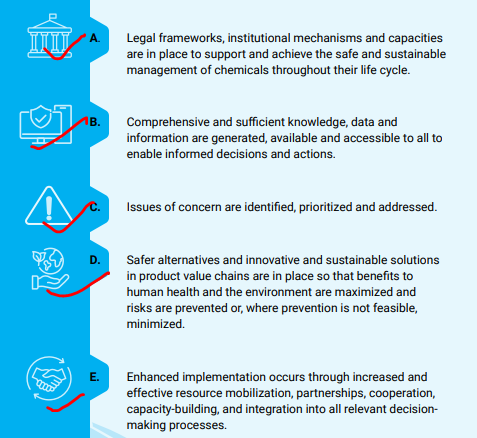
The Global Framework on Chemicals establishes a set of strategic objectives aimed at achieving the safe and sustainable management of chemicals and waste throughout their life cycle. These objectives provide a structured direction for governments, industries, and stakeholders to strengthen chemical governance systems, improve transparency, and promote environmentally sound practices.
The first objective focuses on strengthening legal frameworks, institutional mechanisms, and capacities to support the safe and sustainable management of chemicals. This includes developing effective regulations, enhancing enforcement mechanisms, and building institutional capacity to ensure that chemicals are managed responsibly at all stages of their life cycle.
The second objective emphasizes the importance of generating, sharing, and ensuring access to comprehensive knowledge, data, and information. Availability of accurate and reliable chemical data enables informed decision-making by policymakers, industries, and the public, thereby reducing risks associated with chemical exposure and misuse.
The third objective addresses the need to identify, prioritize, and manage issues of concern related to chemicals and waste. This includes emerging chemical risks, hazardous substances, and pollution challenges that require immediate attention and coordinated action at national and international levels.
The fourth objective promotes the development and adoption of safer alternatives, as well as innovative and sustainable solutions across product value chains. By encouraging green chemistry, cleaner production technologies, and sustainable materials, this objective aims to maximize benefits for human health and the environment while preventing or minimizing risks.
The fifth objective highlights the importance of enhanced implementation through effective resource mobilization, partnerships, cooperation, and capacity-building. It also emphasizes the integration of chemical management into broader policy and decision-making processes, ensuring that chemical safety is embedded within national development planning and sustainability strategies.
5- Importance of Lifecycle Management of Chemicals
Both SAICM and the Global Framework on Chemicals emphasize the importance of managing chemicals throughout their entire life cycle. This means considering potential risks from the stage of chemical production and import to manufacturing, transportation, use, recycling, and final disposal.
Chemical lifecycle management helps prevent pollution and reduces environmental risks by ensuring that chemicals are handled safely at every stage. For example, industries may adopt safer production processes, governments may regulate hazardous substances, and waste management systems may ensure proper treatment and disposal of chemical waste. Such integrated approaches contribute to protecting public health and maintaining environmental sustainability.
6- Role of Stakeholders in Implementing the Global Framework
The effective implementation of international chemical management frameworks requires active participation from multiple stakeholders. Governments play a key role by developing regulations, establishing monitoring systems, and coordinating national chemical safety programs. Industries are responsible for ensuring safe production practices, providing accurate chemical information, and adopting environmentally sound technologies.
Academic institutions and research organizations contribute by conducting studies on chemical risks and developing safer alternatives. Civil society organizations and environmental platforms also play an important role in raising awareness and encouraging responsible chemical use among communities. Collaboration among these stakeholders is essential for achieving global chemical safety objectives.
7- GFC Implementation in Pakistan and Opportunities
For countries like Pakistan, international frameworks such as the Global Framework on Chemicals provide important direction for strengthening national chemical governance systems. In this context, Pakistan has taken a significant step by formulating the National Integrated Chemical Management and Safety Framework (2026–2031). Although the framework is currently in draft form and under the approval process, it represents a major achievement and the first coordinated effort in the country’s history to address fragmented chemical governance through an integrated national mechanism.
The National Integrated Chemical Management and Safety Framework of Pakistan (2026–2031) provides a comprehensive approach for the life-cycle management of chemicals across all sectors. Aligned with the objectives of the Global Framework on Chemicals, it identifies six national priority areas based on ground realities, including regulatory reforms, chemical data management, information sharing and accessibility, risk evaluation and management, emergency preparedness and response, and integration of chemical management into national development planning. The framework also emphasizes capacity building and sustainable financing through existing institutional arrangements, and proposes implementation through a National Coordination Committee supported by thematic working groups to ensure effective multi-sectoral coordination.
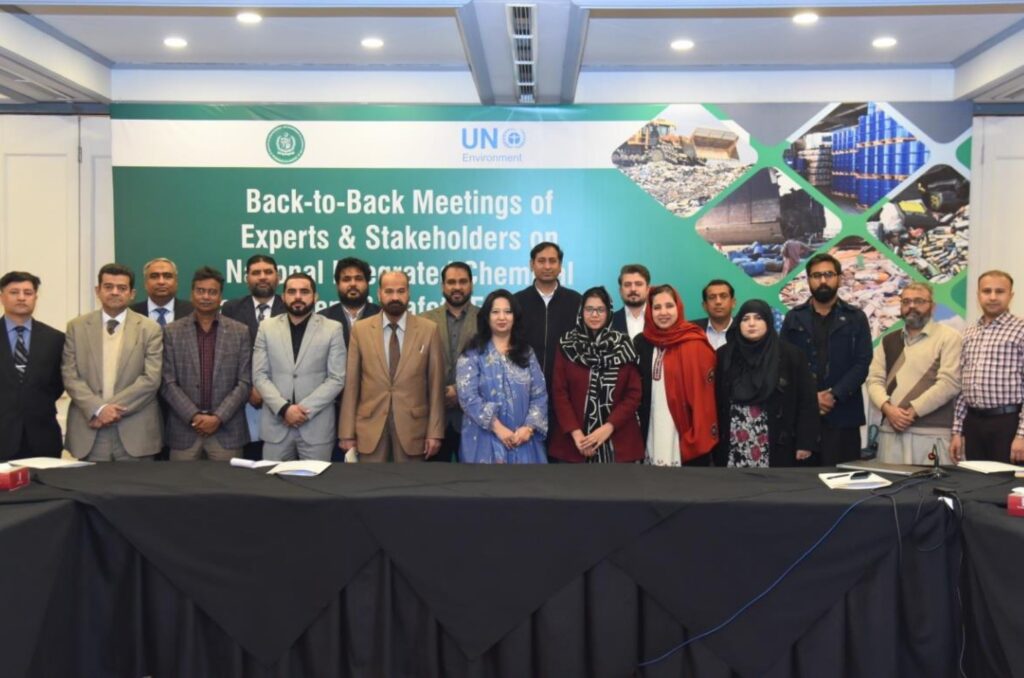
Integrated Chemical Management and Safety Framework 2026-2031, 28 Dec, 2024, Islamabad Pakistan
Despite this progress, there remain significant opportunities for Pakistan to further strengthen chemical management systems. These include enhancing regulatory enforcement, developing a national chemical inventory and database, improving inter-agency coordination, and building technical capacity for risk assessment and monitoring. Strengthening public awareness and promoting industry compliance with international standards such as the Globally Harmonized System can also support safer chemical use across sectors.
The Global Framework on Chemicals also opens new avenues for international cooperation and resource mobilization. Countries like Pakistan and other developing countries can benefit from technical assistance, capacity-building programs, and dedicated funding mechanisms under the GFC to support implementation of national priorities. Access to international financial resources, partnerships with development organizations, and engagement with global knowledge networks can significantly accelerate progress toward sound chemical management. By effectively utilizing these opportunities, Pakistan can enhance environmental protection, improve public health outcomes, and align its national systems with global best practices.
8- Conclusion
The safe management of chemicals is a critical global challenge that requires coordinated international action and strong national policies. The Strategic Approach to International Chemicals Management laid the foundation for global cooperation in chemical safety, while the Global Framework on Chemicals now provides a renewed pathway for addressing emerging chemical risks and promoting sustainable chemical management.
By strengthening governance systems, promoting transparency, and encouraging stakeholder collaboration, countries can ensure that chemicals are produced, used, and disposed of responsibly. Such efforts are essential not only for environmental protection but also for safeguarding human health and supporting sustainable development worldwide.
Through the Gray2GreenEnvironment platform, awareness about chemical safety, hazardous waste management, and sustainable environmental practices can continue to grow, helping communities and professionals better understand the importance of responsible chemical management.
0 Comments